

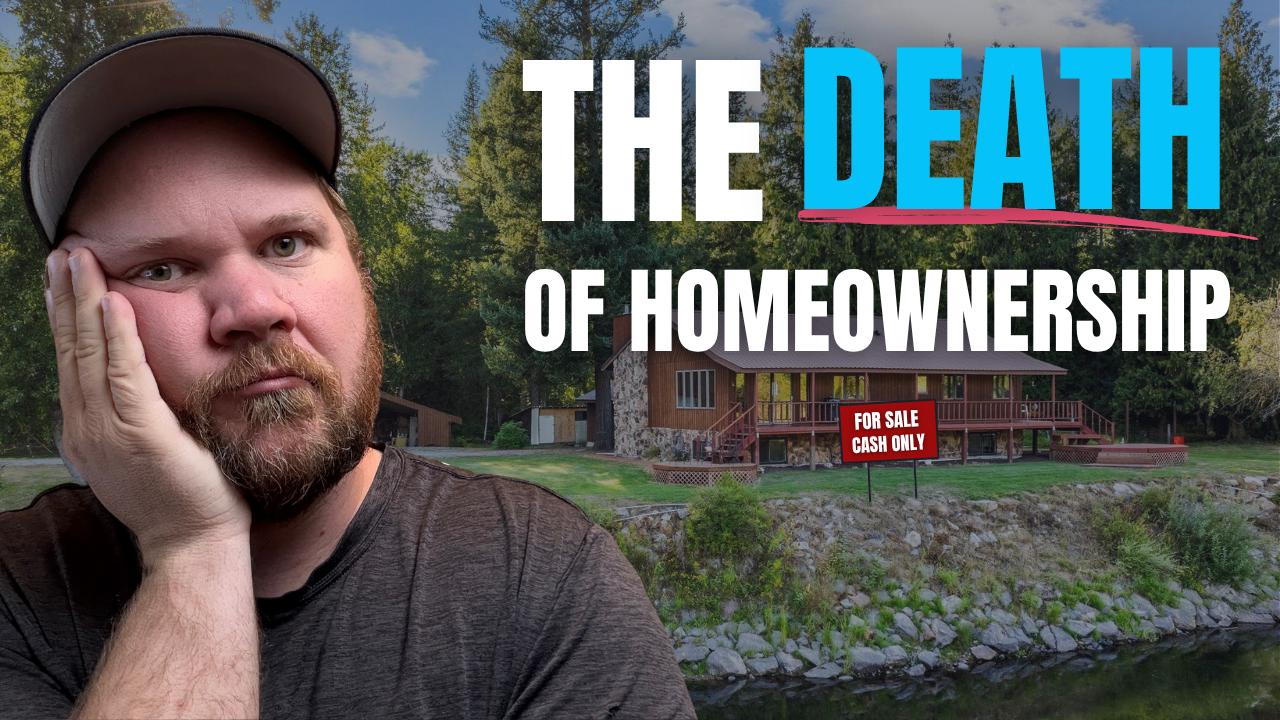
Not long ago, getting homeowner’s insurance was just a box you checked on the way to closing. It was a box you checked, a document you signed, and then you moved on. Today, it has become one of the biggest roadblocks in a transaction. Policies are harder to secure, premiums are higher, and for some homes, coverage can disappear at the last minute. What was once routine is now a major concern for buyers and sellers alike.
So why the sudden shift? The answer lies in what’s happening nationwide. Disasters are hitting harder and more often than ever before. Just when you thought you needed them the most, insurance companies are walking away. They’re pulling out of entire states, canceling policies, and leaving homeowners stranded.
And if you’re in the market to buy a home, you need to pay attention. The safety net you’re counting on is disappearing faster than you think. In some parts of the country, it’s already becoming nearly impossible to buy a house unless you’re paying cash. And while we hope it never gets that far here in Sandpoint, the ripple effects are already being felt.
Why Insurance Is Suddenly Harder to Get
In 1960, only 39 natural disasters were reported worldwide. Fast forward to 2023, and that number rose to 399, a tenfold increase in just 60 years. And here in the U.S., we’re seeing the same trend. In 2023 alone, there were 28 extreme weather events that each caused over a billion dollars in damage, breaking the previous record of 22 set in 2020. Since 1980, the U.S. has seen 395 billion-dollar disasters, including severe storms, tropical cyclones, floods, wildfires, winter storms, and droughts.
These numbers explain why carriers are raising premiums, pulling out of high-risk states, and in some cases canceling policies altogether. And right here in Sandpoint, we’re starting to see the effects in real time.
A Story From Right Here in Sandpoint
I recently helped clients purchase a rural property outside Sandpoint. Because the location came with more risk, we had to go through a secondary insurance company instead of the big names you’re used to hearing, not State Farm, Allstate, or Farmers. These specialty carriers are willing to take on more risk, but their policies come at a higher cost.
We did everything right: got the quote, secured the insurance binder, and sent it to the lender. We were all set to close. Then, just two days before closing, the insurance broker called.
The carrier decided to pull the policy. Why? Because there was an active fire within 15 miles of the home. Their company rule was simple: if there’s an active fire within 25 miles, they won’t issue new coverage.
That decision nearly derailed the entire deal. And it’s a good reminder that in Sandpoint and the surrounding areas, the “fire line” has become one of the biggest hurdles buyers face when it comes to insurance.
What Is the FireLine?
Most insurance companies use tools to measure wildfire risk before they’ll issue or renew a policy. One of the most widely used is called FireLine.
Here’s how it works:
FireLine scores properties on wildfire danger, often on a scale from 0 (low risk) to 30 (extreme risk).
It factors in things like vegetation density, slope of the land, and how close the property is to wildfire fuel sources.
Each insurance company sets its own rules. For some, anything above a certain score (say 6 or 8) is too risky. Others go higher.
Some carriers, like the one in my story, add additional rules, such as refusing new policies if there’s an active fire within 25 miles.
The result? A home that looks perfect to you might be flagged as uninsurable by your carrier. And without insurance, you can’t get a mortgage.
Why Mortgages Depend on Insurance
Here’s a critical piece many buyers overlook: if you can’t get homeowner’s insurance, you can’t get a mortgage.
Banks and lenders require insurance as a condition of the loan. It’s not about protecting you, it’s about protecting the bank’s investment. If a disaster destroys your home, the insurance pays the lender back for the balance of your loan first.
Without that safety net, lenders won’t take the risk. And that means unless you’re paying cash, you can’t buy the house.
If this trend continues, and coverage becomes more limited, entire neighborhoods could be left to cash buyers only. That cuts out two-thirds to three-quarters of the buyer pool, driving down home values and making it harder for sellers to move their property.
Why Premiums Are Rising in Sandpoint
It’s not just about whether you can get a policy, it’s also about how much you’ll pay for it. Homeowner’s insurance premiums have been climbing at record speed across the country, and Idaho has been hit especially hard.
According to the Idaho Statesman, premiums in Idaho increased 34 percent in a single year, the largest percentage jump in the U.S.
Another report by Insurify cited a 17 percent increase in 2024 alone.
Today, the average homeowner’s insurance policy in Idaho costs around $1,448 per year (MoneyGeek).
Those numbers are averages, which means some households are seeing much bigger hikes, especially in rural and higher-risk areas. And unlike property taxes, which you can predict, insurance premiums can fluctuate year to year depending on how carriers adjust their risk charts.
What Buyers and Homeowners in Sandpoint Should Do
So what can you do? Whether you’re buying, already own, or preparing to sell, here are some steps that matter right now in Sandpoint.
For buyers: Don’t wait until the week before closing to figure out insurance. My recommendation is that the moment you go under contract, day one, you should be reaching out to insurance companies to start working on a quote. That way, you’ll know early on if the home is insurable and what the costs will look like.
Here in Idaho, the standard real estate contracts don’t include an insurance contingency. That means if you can’t secure coverage, you’re at risk of losing your earnest money. To protect my clients, I’ve started adding a clause directly into offers:
“Buyer to have 10 business days to find suitable homeowners' insurance. If the buyer is unable to secure suitable homeowner insurance for the property, this contract shall be terminated and the earnest money returned to the Buyer.”
This simple addition creates a safety net. In the story I shared earlier, had we not included insurance in the contingencies, my clients would have lost their earnest money when the carrier pulled out two days before closing.
There’s also Section 4: Satisfaction and/or Removal of All Contract Contingencies in Idaho’s contracts where contingencies are automatically removed a set number of days before closing, usually to protect sellers. When I represent buyers, I specifically exclude insurance from that automatic removal. It’s a small detail that can make a huge difference if a last-minute insurance issue comes up.
And here’s where timing matters most. Too often, buyers wait until the very end of the process to lock in their insurance, sometimes only a week before closing. At that point, all other contingencies have typically been removed, and if you run into a problem, you may have no way out without losing your earnest money. Unlike inspection issues, which you can catch and resolve during due diligence, insurance problems discovered late in the game can leave you stuck.
For current homeowners: Review your policy. With rising construction costs, many homeowners are underinsured without realizing it. Also, don’t be afraid to shop around, companies change their rates and appetite for risk all the time.
Be mindful about when and how often you file claims. If you make a claim on your current property, sell it, and then go to buy a new house, that claim can follow you and count against you when applying for new coverage. I’ve seen it happen, and it is very true.
Insurance companies also track the frequency of claims. If you make too many claims close together, you could be dropped entirely and forced into the secondary market, where premiums are higher and coverage options are limited. Think of it like a traffic ticket, it stays on your record for a certain number of years before it finally drops off.
For sellers: Be aware that insurance availability impacts your buyer pool. If your home is in a higher-risk area, it may take some extra planning or incentives to overcome that obstacle. It’s also not a bad idea to call your current insurance company to see if they’ll issue a new policy on your home. If not, start shopping around for other carriers and have that information ready for your next buyer.
Many homeowners are surprised to learn that their existing insurance company won’t write a new policy, even if they’ve been paying premiums for years. That’s because carriers regularly update their charts and adjust risk tolerance for certain areas. Having answers ready for a potential buyer can help keep a deal moving forward and prevent last-minute surprises.
Final Thoughts
Buying a home in Sandpoint is still one of the best lifestyle and financial decisions you can make. But in today’s market, homeowner’s insurance is no longer a formality, it’s a make-or-break factor in whether your deal closes.
Don’t wait until the last minute to figure out insurance. Talk to your agent, talk to your insurance company, and get ahead of it. The earlier you start, the smoother your home journey in Sandpoint will be.
→ Buying a Home in Sandpoint: Essential Questions to Ask
→ Sandpoint Neighborhoods: Living in West Sandpoint
→ 12 Things to Do Before You Sell
Check out this article next